
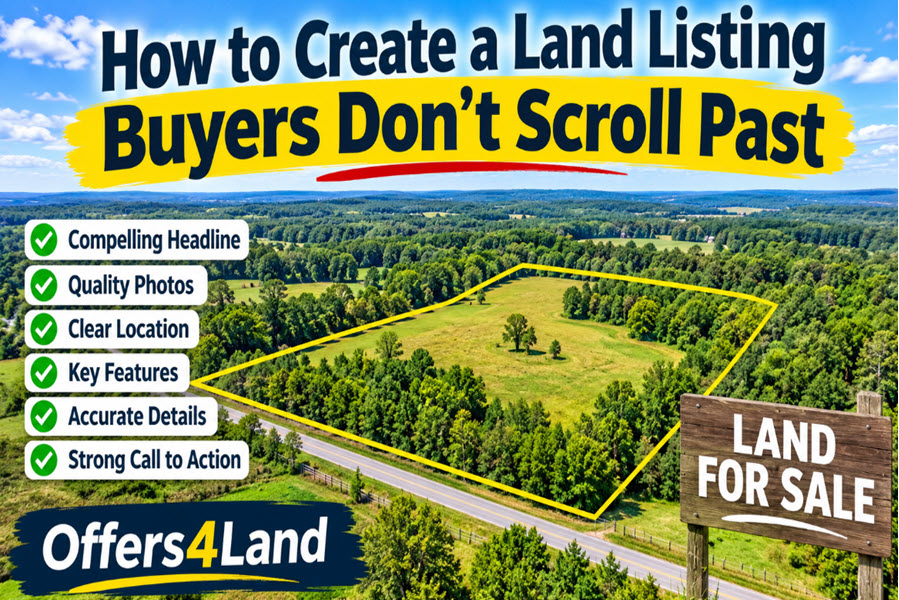
How to Create a Land Listing Buyers Don’t Scroll Past

Selling vacant land online can be challenging. Unlike houses, vacant lots do not have kitchens, living rooms, beautiful interiors, or other features that immediately attract attention. Buyers cannot walk through a property online and imagine how comfortable the living room might feel. Instead, they need to understand the land’s location, size, potential uses, accessibility, and value through the information and images provided in the listing.
That makes creating an effective land listing especially important.
A well-written listing does more than announce that a property is for sale. It captures attention, answers important questions, builds trust, and encourages potential buyers to take the next step. Whether you are selling a small residential lot, recreational acreage, farmland, or an investment property, the way you present it can make a significant difference.
The good news is that you do not need an expensive marketing campaign or professional advertising agency to create an attractive listing. With the right information, quality visuals, and a buyer-focused approach, you can make your property stand out.
Here is how to create a land listing that buyers actually want to explore instead of scrolling past.
1. Start With a Headline That Grabs Attention
Your headline is often the first thing a potential buyer sees. If it is unclear, generic, or uninteresting, buyers may move on without opening your listing.
Avoid headlines such as:
- Land for Sale
- Beautiful Property Available
- Great Investment Opportunity
- Affordable Vacant Lot
These headlines do not tell buyers much about the property or why they should be interested.
Instead, create a headline that highlights the property’s most attractive characteristics.
For example:
- 2 Acres Near Smith Lake – Private Location and No HOA
- Affordable 0.5-Acre Residential Lot in Alabama
- 5 Acres of Recreational Land With Road Access
- Build Your Dream Home on This 1-Acre Tennessee Property
- 10 Acres of Open Land Near Outdoor Recreation
A strong headline usually includes three important elements:
- Property size: Buyers want to know how much land is available.
- Location: Mention the city, county, or a recognizable nearby destination.
- Main selling point: Highlight something that makes the property attractive, such as road access, utilities, privacy, views, or recreational potential.
Keep your headline clear and informative. You want buyers to understand the property’s appeal immediately without making exaggerated promises.
2. Use High-Quality Photos That Show the Property Clearly
Photos are among the most important elements of an online land listing. Since buyers cannot physically inspect the property through a screen, your images need to help them understand what they are considering.
A listing with only one blurry photograph may create uncertainty, while a collection of useful images gives buyers a better sense of the property.
Consider including the following:
Ground-level photographs
Show the actual land, vegetation, terrain, trees, open spaces, and surrounding environment. These images help buyers understand the property’s physical appearance.
Aerial photographs
Aerial views can help buyers understand the property’s shape, surroundings, road access, and proximity to neighboring properties.
Parcel boundary images
One of the biggest challenges when selling vacant land is helping buyers identify exactly which piece of land is for sale. An aerial image with clearly marked parcel boundaries can make a major difference.
Make sure boundary lines are based on reliable parcel information and are presented as approximate when appropriate. Do not suggest that an illustrative boundary overlay replaces a professional survey.
Nearby attractions and surroundings
If the property is close to a lake, river, park, town, highway, or recreational destination, consider including relevant photographs. These images can help communicate the location’s appeal.
Remember that photographs should represent the actual property or clearly identified surrounding locations. Avoid using attractive house images or landscape photographs that could mislead buyers into believing those features are on the property.
3. Make the Property Location Easy to Understand
Location is one of the most important factors in a land purchase. Buyers want to know not only where the property is located but also what is nearby.
A listing that simply says “Located in Alabama” or “Situated in Virginia” does not provide enough information.
Be more specific whenever possible.
Include:
- State and county
- City or nearest community
- ZIP code
- Nearby towns and cities
- Major roads and highways
- Distance to important destinations
- Nearby parks, lakes, rivers, or recreational areas
For example:
“Located in Walker County, Alabama, this property offers convenient access to Jasper and nearby outdoor recreation. Birmingham is approximately 40 minutes away, making the area worth exploring for buyers seeking a property outside the city.”
You can also provide a Google Maps link and GPS coordinates to help buyers locate the property.
A parcel boundary map is particularly useful because it helps buyers distinguish the actual property from neighboring land.
The easier you make it for buyers to understand the location, the more confident they will feel about exploring the opportunity.
4. Highlight the Best Features Without Overpromising
Every property has characteristics that may appeal to a particular type of buyer. Your job is to identify those characteristics and present them clearly.
For example, a wooded property may attract someone looking for privacy, while open acreage may appeal to someone interested in building or agricultural use.
Some features worth highlighting include:
- No HOA, if verified
- No known deed restrictions, if confirmed
- Road frontage or legal access
- Electricity available nearby
- Public water availability
- Potential for residential construction
- Scenic views
- Wooded or open terrain
- Proximity to recreational areas
- Owner financing availability
- Affordable property taxes
However, be careful with claims about development potential.
For example, saying “Build Your Dream Home Here” may be misleading if zoning, access, septic approval, or other requirements have not been verified.
A better approach is to explain what is known and what buyers should independently confirm.
Instead of saying:
“Perfect for building a four-bedroom home.”
You could say:
“Residential use may be possible, subject to local zoning, septic approval, permitting, and other applicable requirements. Buyers should verify their intended use with the appropriate county authorities.”
Honest descriptions attract more serious buyers and reduce misunderstandings later.
5. Provide Complete and Accurate Property Information
One of the biggest reasons buyers leave land listings is missing information.
Imagine finding a property that looks attractive, but the listing does not mention its size, zoning, road access, utilities, or restrictions. You would probably need to contact the seller just to find out the basics.
Many buyers will simply move on to another listing.
To avoid this, organize your property information into clear sections.
Property Information
Include:
- Parcel identification number (APN)
- State
- County
- Parcel size
- Zoning classification
- Known deed restrictions
- ZIP code
- Annual property taxes
Utilities and Road Access
Explain the availability and status of:
- Electricity
- Public water
- Well water
- Sewer or septic
- Road access
- Internet availability, if verified
Be specific about the difference between utilities being available nearby and utilities already connected to the property.
For example, “Electricity available at the road” is different from “Electricity connected to the property.”
Similarly, if no perc test has been conducted, say so. Do not describe a property as suitable for a septic system unless the necessary evaluation or approval supports that statement.
Property Maps and Location
Include:
- Google Maps link
- GPS coordinates
- Parcel boundary map
- Nearby cities and attractions
- Approximate driving distances
Organized information makes a listing easier to scan and helps buyers determine whether the property matches their needs.

6. Explain What Buyers Can Do With the Land
Buyers are not just purchasing acreage. They are purchasing the possibility of using that land for something they have in mind.
Help them visualize the opportunities without promising uses that have not been approved.
Depending on the property’s characteristics and local regulations, possible interests might include:
- Building a primary residence
- Creating a weekend getaway
- Recreational activities
- Camping
- Gardening or small-scale agriculture
- Holding land as a long-term investment
- Building a cabin
- Using the property for a permitted mobile or manufactured home
For example:
“Looking for a place away from the busy city? This 2-acre property offers an opportunity to explore recreational or residential possibilities in a peaceful rural setting. Whether you are considering a future homesite or a long-term land investment, this property is worth a closer look. Verify zoning, access, utilities, and permitted uses with the county before purchasing.”
This type of description helps buyers connect the property’s features with their own goals.
Remember that zoning, deed restrictions, environmental rules, and local regulations may limit certain uses. Always distinguish potential uses from confirmed permitted uses.
7. Be Transparent About Pricing and Financing
Price is one of the first things buyers consider when browsing land listings.
If possible, display the asking price clearly instead of forcing buyers to contact you for basic pricing information.
If you offer seller financing, make it visible in the listing. Flexible payment options can attract buyers who may not want to pay the entire purchase price upfront.
For example:
Cash Price: $15,000
Owner Financing Available:
- Down Payment: $3,000
- Monthly Payment: $350
- Early payoff available without a prepayment penalty.
Make sure the terms are accurate and clearly explain any additional fees, closing costs, or other applicable expenses.
You can also highlight genuine price reductions:
“Recently reduced from $18,000 to $15,000!”
Avoid artificial discounts or misleading claims about the property’s market value. Buyers appreciate straightforward pricing, and transparency helps build credibility.
8. Write a Description That Is Easy to Read
Even when you have excellent information, presentation matters.
A large paragraph containing every property detail can overwhelm readers, especially those browsing on mobile devices.
Instead, use short paragraphs, descriptive headings, and bullet points.
A good property description should follow a logical order:
- Introduce the property and its main selling point.
- Explain the location and nearby attractions.
- Highlight the property’s physical features.
- Describe utilities and road access.
- Provide zoning and restriction information.
- Explain pricing and financing options.
- Tell buyers how to view maps or request more information.
Here is a simple example:
“Discover this affordable 0.75-acre property in a peaceful area of Alabama. Whether you are exploring a future homesite or looking for a long-term land investment, this property offers an opportunity worth considering.
Located within convenient driving distance of nearby communities, the property provides access to local shopping, dining, and outdoor recreation.
Electricity and public water are available nearby, subject to provider confirmation. Buyers should verify zoning, septic requirements, access, and intended use with the county before purchasing.
Owner financing may be available, making it easier to explore land ownership without paying the entire purchase price upfront.
Check out the parcel map and location details to see if this property is right for your plans!”
Notice that the description is informative without being excessively promotional.
9. Include a Clear Call to Action
A good listing should not leave buyers wondering what to do next.
After reviewing the photographs, maps, price, and property information, interested buyers should have a clear way to contact you or learn more.
Examples of effective calls to action include:
- Interested? Contact us today for additional property information.
- View the parcel map and explore the property’s location.
- Have questions about owner financing? Send us a message.
- Ready to make an offer? Contact the seller to discuss the next steps.
- Request additional photos and property details today.
If you have a property website, include a direct link to the listing.
Avoid using several competing calls to action. One clear next step is usually more effective than overwhelming buyers with multiple instructions.
10. Make Your Listing Mobile-Friendly
Many people search for land using their smartphones. That means your listing should be easy to read and navigate on a smaller screen.
Consider these practical improvements:
- Use short paragraphs.
- Avoid unnecessarily long headlines.
- Place the most important information near the top.
- Use high-quality images that load properly.
- Make maps and property links easy to access.
- Keep contact information visible.
- Avoid excessive capitalization and unnecessary symbols.
Also, check your listing on an actual mobile device before publishing it.
A description that looks organized on a desktop may become difficult to read on a smartphone.
11. Use Search-Friendly Words Buyers Actually Search For
Search engine optimization (SEO) can help your property listing appear when potential buyers search online.
Think about the phrases someone might use when looking for land.
Examples include:
- Land for sale in [County], [State]
- Affordable acreage in [City]
- Residential lots for sale in [State]
- Owner-financed land
- Recreational land for sale
- Small acreage with road access
- Vacant land near [Lake or City]
Include relevant phrases naturally in your headline, description, image alt text, and page title.
For example, if you are selling a 2-acre property in Walker County, Alabama, your title might be:
“2 Acres of Land for Sale in Walker County, Alabama – No HOA”
Do not repeatedly insert the same keywords just to improve rankings. Search engines and buyers both benefit from natural, useful descriptions.
You can also link to relevant resources, such as county planning departments, property tax offices, and official GIS parcel maps, where appropriate.
12. Build Trust Through Transparency
Buying land is a significant decision. Many buyers are cautious because vacant properties can involve complicated questions about access, zoning, utilities, boundaries, and development requirements.
A listing that acknowledges these details can stand out from one that makes unrealistic promises.
Be upfront about:
- Whether a survey has been completed
- Whether a perc test has been conducted
- Whether septic approval exists
- Whether utilities are connected or simply available nearby
- Whether legal road access has been confirmed
- Whether there are known restrictions or HOA requirements
- Whether the property is located in a flood zone, if verified
If certain information is unknown, say so.
For example:
“No survey or perc test has been completed. Buyers are encouraged to conduct their own due diligence and confirm development requirements with the appropriate local authorities.”
This may seem less promotional, but it sets realistic expectations and helps attract buyers who understand the land-buying process.
13. Promote Your Listing Beyond One Website
Publishing a listing is only the beginning. You also need to put it in front of potential buyers.
Consider using several marketing channels:
Real Estate Listing Platforms
Publish your property on relevant land marketplaces where buyers are actively searching for vacant land.
Facebook Marketplace
Use an attractive headline, several clear photos, the asking price, and a concise description. Make sure your post follows the platform’s current listing policies.
Facebook Groups
Join relevant land-buying, rural property, homesteading, and local real estate groups. Follow each group’s posting rules and share useful information rather than repeatedly posting advertisements.
Your Own Website
A dedicated listing page gives you more control over photographs, descriptions, maps, contact information, and search engine optimization.
Email and SMS Marketing
If you have a database of people who previously expressed interest in similar properties, you can send relevant updates. Make sure you follow applicable consent, privacy, and marketing regulations.
The key is consistency. A well-prepared listing can reach more potential buyers when it is distributed through multiple appropriate channels.
14. Keep Your Listing Updated
An outdated listing can damage buyer confidence.
Imagine a buyer contacting you about a property only to discover that the advertised price is incorrect or the land has already been sold.
To prevent this, review your listings regularly.
Update:
- Asking prices
- Financing terms
- Availability status
- Property photographs
- Maps and location links
- Utility information
- Restrictions and zoning details
- Contact information
If a property goes under contract, update its status. If the deal falls through and the property becomes available again, consider updating the headline and notifying interested buyers.
Accurate information makes your listings more reliable and helps avoid unnecessary conversations.
15. Use a Simple Land Listing Checklist Before Publishing
Before publishing your next listing, review this checklist to make sure you have included everything buyers need.
Listing Essentials
-
Clear, location-specific headline
-
Accurate asking price
-
Property size and county
-
APN or parcel number
-
High-quality property photographs
-
Aerial or satellite image
-
Parcel boundary map
-
GPS coordinates or map link
-
Road access information
-
Utility availability and status
-
Zoning and known restrictions
-
Perc test and survey status
-
Nearby cities and attractions
-
Financing details, if available
-
Clear call to action
-
Correct contact information
-
Mobile-friendly formatting
The more complete your listing is, the easier it becomes for potential buyers to evaluate the opportunity.
Final Thoughts: Make Every Listing Count
Creating a land listing that buyers do not scroll past is about much more than writing an attractive headline or uploading a few photographs.
It requires understanding what buyers want to know, presenting information clearly, highlighting genuine property advantages, and building trust through accurate details.
Start with a compelling headline. Use quality photographs and parcel maps. Explain the location, utilities, access, and potential uses. Make pricing and financing information easy to understand, and always give buyers a clear next step.
Most importantly, remember that buyers are not simply looking for a piece of land. They are looking for a property that fits their plans, budget, and expectations.
When your listing helps them see that possibility while answering their important questions, you have a much better chance of turning casual browsers into serious inquiries.
Ready to put your land in front of potential buyers?
At Offers4Land, we believe successful land marketing starts with clear information, effective presentation, and reaching the right audience. Create a listing that highlights what makes your property valuable and gives buyers a reason to take a closer look. Also Find us on Facebook.
Your next buyer could be just one great listing away.
